Initiative for Establishing Acoustic Design Standards for E-Sports Arenas
The global esports industry has witnessed exponential growth over the past decade, transforming from niche gaming hubs into full-fledged entertainment complexes. As these venues evolve, the need for standardized acoustic design becomes increasingly critical. Unlike traditional sports arenas or concert halls, esports venues present unique challenges that demand specialized solutions. The immersive nature of competitive gaming requires crystal-clear audio for both players and spectators, while preventing disruptive echoes or sound bleed between stations.
Understanding the acoustic requirements of modern esports venues reveals a complex interplay of technical and experiential factors. Players depend on precise audio cues for competitive advantage, where footsteps or gunshots must be distinguishable amidst chaotic in-game action. Simultaneously, live audiences expect thunderous crowd reactions without distortion, and stream viewers require broadcast-quality sound. This multifaceted audio ecosystem necessitates careful planning from the initial architectural phase through to final technical installations.
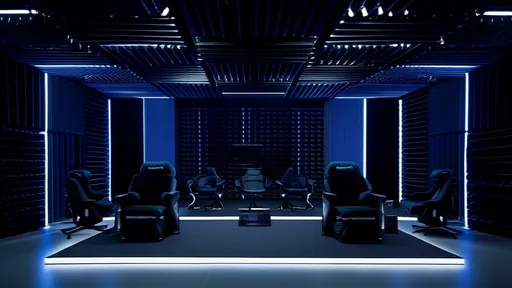
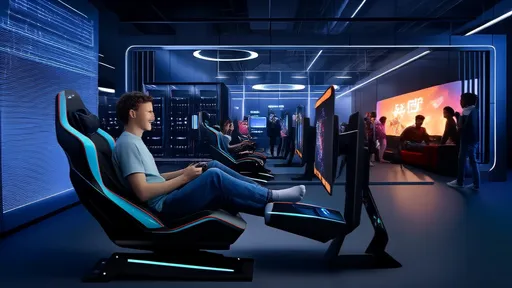
The physical characteristics of esports venues differ significantly from conventional entertainment spaces. Most facilities feature high-density seating with numerous gaming stations, creating challenging environments for sound control. Reflections from multiple hard surfaces - including monitors, glass partitions, and minimalist interior designs common in gaming aesthetics - can create problematic reverberation. Furthermore, the simultaneous operation of dozens or hundreds of gaming setups produces cumulative low-frequency noise that standard acoustic treatments often fail to address adequately.
Current industry practices reveal a patchwork of approaches to venue acoustics, with many operators relying on after-the-fact solutions rather than integrated design. Some premium facilities employ professional audio consultants, while smaller venues frequently make do with off-the-shelf solutions not optimized for gaming environments. This inconsistency leads to vastly different spectator experiences and potentially disadvantages competitors in official tournaments. The absence of universal standards also complicates venue design for architects and engineers unfamiliar with esports' specific requirements.
Player performance represents perhaps the most critical consideration in acoustic design. Studies have demonstrated how improper sound environments can negatively affect reaction times and decision-making in competitive scenarios. The ideal acoustic environment allows competitors to focus while maintaining spatial awareness of in-game audio cues. This requires careful control of both internal reflections and external noise infiltration, particularly in urban locations where street noise could interfere with tournament play.
Spectator experience forms another vital component of the acoustic equation. Modern esports venues often function as hybrid spaces, serving live audiences while accommodating streaming production crews. The sound system must deliver impactful crowd noise for participants while maintaining clarity for broadcast commentary. Variable acoustics solutions, including adjustable absorption panels and directional speaker arrays, show promise in addressing these competing demands but require standardization across the industry.
Equipment noise represents an often-overlooked challenge in esports venue design. The collective hum of high-performance gaming PCs, cooling systems, and peripheral devices creates a persistent low-frequency background that can mask critical game sounds. Traditional noise reduction methods frequently prove inadequate against this type of equipment noise, necessitating innovative approaches to both hardware placement and acoustic treatment.
The growing trend of multipurpose esports arenas introduces additional acoustic complexities. Many modern facilities host not only competitive gaming but also concerts, corporate events, and community gatherings. While this diversification makes economic sense, it requires acoustic systems capable of adapting to radically different sound profiles. Retractable sound-absorbing curtains, movable baffles, and electronic sound masking systems have emerged as potential solutions, though their implementation varies widely.
Lighting and visual effects, while primarily serving the visual spectacle, interact significantly with acoustic treatments. Many sound-absorbing materials conflict with the sleek, reflective surfaces favored in esports aesthetics. This tension between form and function has led some venues to prioritize visual impact over acoustic performance, often to the detriment of the overall experience. Developing acoustic solutions that complement rather than compromise the distinctive visual language of gaming spaces remains an ongoing challenge for designers.
The call for standardized acoustic guidelines grows louder as esports venues proliferate worldwide. Tournament organizers, team owners, and venue operators increasingly recognize how proper acoustic design contributes to competitive integrity and spectator enjoyment. Potential standards might address reverberation time targets for different venue sizes, maximum background noise levels during competition, and specifications for sound isolation between player stations. Such guidelines would provide much-needed clarity for architects and engineers while ensuring consistent quality across facilities.
Technological advancements offer promising tools for addressing esports acoustics challenges. Beamforming microphone arrays can isolate specific sound sources in noisy environments, while AI-driven audio processing helps separate game sounds from ambient noise. Materials science continues to produce new sound-absorbing composites that combine performance with aesthetic flexibility. These innovations, combined with empirical research into how sound affects gaming performance, could form the foundation of future design standards.
The economic implications of proper acoustic design cannot be overlooked. While premium treatments require significant upfront investment, they can dramatically reduce ongoing operational costs. Properly designed spaces need less sound reinforcement equipment and experience fewer technical issues during events. Moreover, venues with superior acoustics gain competitive advantages in hosting major tournaments and attracting top-tier esports organizations for training facilities.
Looking ahead, the development of esports-specific acoustic standards will likely involve collaboration between game developers, audio engineers, and professional players. Game sound designers understand the audio cues critical to gameplay, while players can provide practical feedback about real-world competitive conditions. This multidisciplinary approach will ensure that standards serve both the technical requirements and human factors of competitive gaming environments.
As esports continues its trajectory toward mainstream recognition, the quality of competition venues will play an increasingly important role in the spectator experience. Proper acoustic design contributes not only to fair competition but also to the visceral excitement that makes live esports so compelling. The establishment of clear, practical standards will help the industry mature while preserving the unique energy that distinguishes esports from traditional sports or entertainment venues.