Automatic Music Copyright Identification Technology
The music industry has long grappled with the challenges of copyright infringement, unauthorized sampling, and unlicensed distribution. In recent years, audio fingerprinting and acoustic fingerprinting technologies have emerged as powerful tools to identify and protect copyrighted music. These systems analyze the unique characteristics of audio recordings—often referred to as music DNA—to detect matches even when the content has been altered, remixed, or reproduced in low-quality formats.
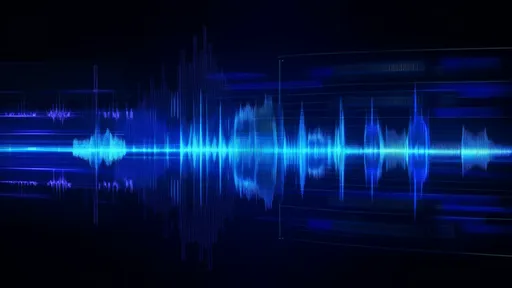
Unlike traditional metadata-based identification, which relies on track titles, artist names, or album information, audio fingerprinting examines the actual sound waves. Advanced algorithms break down tracks into spectral components, analyzing frequencies, amplitudes, and temporal patterns to create a digital signature. This signature remains consistent regardless of format changes, compression, or minor edits, making it an indispensable tool for rights holders and streaming platforms.
The applications of this technology are vast. Streaming services like Spotify and YouTube use it to automatically identify and monetize copyrighted material, ensuring that artists and labels receive proper royalties. Broadcasters leverage it for compliance monitoring, detecting unlicensed music in radio or TV broadcasts. Even social media platforms employ these systems to flag unauthorized uploads, balancing copyright enforcement with fair use considerations.
One of the most significant breakthroughs in this field has been the development of real-time recognition. Early systems required substantial processing time, but modern solutions can identify songs within seconds—sometimes even fractions of a second. This speed is crucial for live events, where immediate detection of unlicensed music can prevent legal disputes. The technology has also become more resilient to noise interference, allowing it to function effectively in crowded environments like clubs or public venues.
However, the rise of AI-generated music presents new challenges. As synthetic voices and algorithmically composed tracks become more sophisticated, distinguishing between human-created and AI-generated content grows increasingly difficult. Some experts suggest that future iterations of audio fingerprinting may need to incorporate blockchain-based verification or other cryptographic methods to authenticate originality. The industry is also exploring ways to adapt these systems for stem recognition, identifying individual instrument tracks within a mix to address the complexities of modern music production.
Privacy advocates have raised concerns about the potential misuse of acoustic surveillance capabilities. While the technology was developed for copyright protection, its ability to recognize audio patterns could theoretically be repurposed for broader monitoring. Companies developing these systems emphasize that their focus remains strictly on commercial music identification, with safeguards to prevent function creep into other domains.
Looking ahead, the next frontier for music identification may lie in 3D audio recognition. As spatial audio formats gain popularity in streaming and virtual reality applications, fingerprinting algorithms will need to evolve beyond stereo analysis. Researchers are experimenting with machine learning models that can map sound in three-dimensional space, potentially creating even more robust identification methods for immersive audio experiences.
The legal landscape surrounding these technologies continues to evolve as well. Recent court cases have addressed questions about the admissibility of audio fingerprinting as evidence in copyright disputes. While generally accepted as reliable, some challenges remain regarding standardization across different platforms and the potential for false positives—particularly with obscure recordings or unusually modified content.
For independent artists, the democratization of these tools has been transformative. Services that were once accessible only to major labels now offer affordable solutions for smaller creators to protect their work. Cloud-based APIs allow developers to integrate music recognition into their applications, fostering innovation while maintaining copyright compliance. This shift has helped level the playing field in an industry historically dominated by large corporations.
As the technology matures, we're seeing convergence between audio fingerprinting and other forms of media identification. Some systems now combine acoustic analysis with image recognition to identify music videos, while others link to databases of sheet music for comprehensive copyright management. This multimodal approach promises to create an even more robust framework for rights protection across all forms of musical expression.
The future of music copyright protection will likely involve a combination of technological, legal, and educational strategies. While audio fingerprinting provides powerful detection capabilities, industry experts agree that it must be paired with clearer licensing frameworks and greater public awareness about music rights. As the digital landscape continues to evolve, these identification technologies will remain at the forefront of efforts to balance creative freedom with fair compensation for creators.