Please provide the title you would like to have translated into English.
The landscape of API development is undergoing a quiet revolution as intelligent documentation tools transform how developers interact with application programming interfaces. Gone are the days of endlessly scrolling through static documentation or guessing parameter requirements - modern solutions now predict what developers need before they even finish typing.
The Rise of Context-Aware Documentation
Traditional API documentation served as reference manuals that developers would consult after encountering problems. Today's intelligent systems flip this paradigm by proactively offering relevant information based on the developer's current context. These tools analyze the code being written, the developer's previous patterns, and common usage scenarios to surface the most pertinent documentation elements.
Major code editors and IDEs now integrate these capabilities at the core of their functionality. When a developer types an API call, the system doesn't just offer basic autocomplete for method names - it provides entire signature templates, parameter explanations, and even links to relevant examples. This contextual awareness dramatically reduces the cognitive load of switching between coding and documentation lookup.
How Intelligent Completion Works Under the Hood
The magic happens through a combination of static analysis and machine learning. Documentation systems first parse the API's formal specification to understand its structure and requirements. They then build semantic models that map how different endpoints relate to each other and how they're typically used in real-world applications.
As developers work, the system tracks their interactions with the API - which methods they call, in what sequence, with which parameters. Over time, it learns common patterns and can predict likely next steps. When it detects a developer beginning to work with a particular API endpoint, it automatically surfaces documentation for related endpoints that are frequently used together.
The Documentation Feedback Loop
One of the most powerful aspects of intelligent documentation systems is their ability to improve through developer interactions. When multiple developers consistently ignore or modify certain suggested completions, the system learns that those suggestions may not be optimal. Similarly, when developers manually look up documentation that wasn't automatically surfaced, the system notes this as a gap in its predictive capabilities.
API providers benefit tremendously from these usage patterns. They can identify which parts of their documentation are most frequently accessed, which endpoints cause the most confusion, and where developers struggle with implementation. This creates a virtuous cycle where documentation improves based on actual usage, which in turn makes the API more approachable for future developers.
Beyond Text Completion - Visual API Exploration
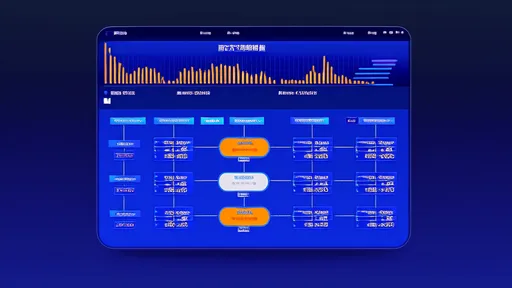
The latest generation of tools goes beyond simple text suggestions. Some now offer interactive visualizations of API structures, allowing developers to navigate relationships between endpoints like exploring a mind map. Others provide real-time validation, visually indicating when parameters don't match expected formats or when required fields are missing.
These visual interfaces prove particularly valuable for complex APIs with deep object hierarchies or numerous optional parameters. Instead of mentally parsing lengthy documentation tables, developers can interactively build requests by selecting options from dynamically filtered lists that only show valid choices based on previous selections.
Challenges in Intelligent Documentation Systems
Despite their advantages, these systems face several implementation challenges. One major hurdle involves maintaining accuracy across API versions - the documentation assistant must precisely track which version of an API a project uses to avoid suggesting deprecated features or incorrect parameter sets.
Another challenge comes from APIs with multiple authentication schemes or regional variations. The documentation system must understand not just what the developer is trying to do, but under what constraints and configurations they're operating. Getting this wrong could suggest approaches that won't work for the developer's specific implementation.
The Human Element in Automated Documentation
Interestingly, the most effective intelligent documentation systems don't eliminate human input - they augment it. Many platforms now allow developers to attach notes, warnings, or examples to specific API elements. These human annotations then get incorporated into the intelligent suggestions, creating a blend of official documentation and community wisdom.
Some teams have found success with systems that learn from their private codebases. The documentation tool studies how the organization typically uses certain APIs and tailors its suggestions accordingly. This proves especially valuable for companies with established patterns or proprietary extensions to public APIs.
Future Directions for API Assistance
Looking ahead, we can expect these systems to become even more proactive. Instead of waiting for developers to begin typing an API call, future tools might analyze the surrounding code and suggest entire API sequences that would accomplish the apparent goal. They might detect when a developer is implementing a well-known pattern using low-level API calls and suggest switching to a higher-level abstraction.
Another likely development involves tighter integration with API testing tools. The documentation system could not only suggest how to make an API call but also generate test cases for it or predict likely failure modes based on the parameter values being used. This would create a seamless workflow from discovery to implementation to validation.
As these tools grow more sophisticated, they'll fundamentally change how developers learn and work with APIs. The documentation will cease to be a separate reference and instead become an integrated part of the development environment - always available, always relevant, and increasingly anticipatory of what the developer needs next.