Optical Circuit Switching in Data Centers
The relentless growth of global data traffic has pushed traditional electronic switching architectures in data centers to their limits. As hyperscale operators grapple with unprecedented bandwidth demands and energy constraints, optical circuit switching has emerged as a promising solution to overcome the bottlenecks of conventional packet-switched networks.
At its core, optical circuit switching represents a paradigm shift from electronic to photonic data movement. Unlike packet switching where data gets chopped into small segments that compete for bandwidth, circuit switching establishes dedicated light paths between endpoints. This fundamental difference gives optical circuits several compelling advantages in data center environments.
The physics behind optical switching reveals why this technology holds such promise. Photons moving through fiber encounter far less resistance than electrons traveling through copper, enabling higher bandwidth with lower latency. Modern optical switches can reconfigure light paths in microseconds - orders of magnitude faster than mechanical alternatives - while consuming minimal power. These characteristics make photonic switching particularly suitable for the elephant flows that dominate data center traffic.
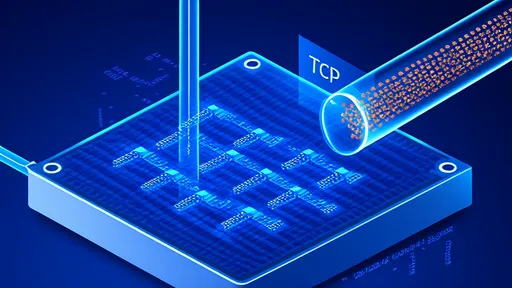
Recent advancements in integrated photonics have transformed optical switching from bulky laboratory setups to compact, commercially viable solutions. Silicon photonics platforms now allow for the mass production of optical components using existing semiconductor fabrication techniques. This technological maturation has enabled the development of optical circuit switches that can handle hundreds of ports while fitting into standard rack units.
The energy efficiency proposition of optical switching cannot be overstated. Traditional electronic switches convert optical signals to electrical and back again - a process that burns power with every conversion. Optical circuit switches maintain signals in the photonic domain throughout transmission, eliminating these wasteful conversions. For hyperscale operators running thousands of switches, this translates to megawatt-scale power savings annually.
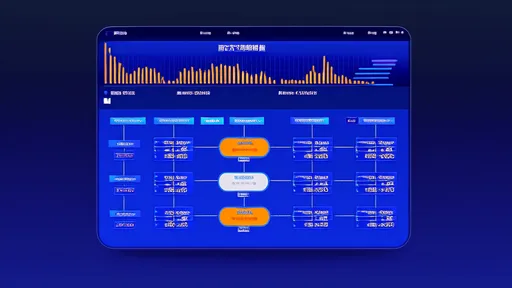
Network architecture implications are profound when introducing optical circuit switching. Most implementations follow a hybrid approach where optical circuits handle the large, predictable flows between top-of-rack switches, while electronic packet switches manage the remaining traffic. This topology leverages the strengths of both technologies - the high throughput of optics for bulk data movement and the flexibility of electronics for dynamic workloads.
Deployment scenarios vary across different data center types. In hypercloud facilities supporting distributed computing, optical circuit switches excel at connecting server clusters working on tightly coupled parallel tasks. Content providers benefit from using optical circuits for east-west traffic between storage and compute nodes. Even financial institutions are exploring ultra-low latency optical switching for high-frequency trading applications.
The control plane represents one of the most active research areas in optical circuit switching. Modern implementations employ sophisticated software-defined networking (SDN) controllers that monitor traffic patterns and dynamically provision optical paths. Machine learning algorithms are being deployed to predict flow sizes and durations, allowing proactive circuit establishment before congestion occurs.
Despite its advantages, optical circuit switching faces several implementation challenges. The technology currently lacks fine-grained bandwidth allocation capabilities compared to electronic switches. Network operators must carefully design traffic engineering policies to maximize optical path utilization. There's also a learning curve involved in managing hybrid electro-optical networks that combine two fundamentally different switching paradigms.
Standardization efforts are underway to address interoperability concerns. The Open Compute Project has published specifications for optical circuit switch designs, while industry consortia are working on common control interfaces. These initiatives aim to prevent vendor lock-in and accelerate market adoption of optical switching technologies.
Looking ahead, several technological trends promise to further enhance optical circuit switching capabilities. The development of wavelength-selective switches will enable more granular bandwidth provisioning. Advances in optical memory could eventually support photonic buffering - a capability that would significantly expand the use cases for optical switching. Researchers are also exploring the integration of optical switching with emerging compute architectures like in-memory processing.
The economic case for optical circuit switching strengthens as data centers scale. While the per-port cost remains higher than electronic switches, the total cost of ownership becomes favorable when considering power savings, reduced cooling requirements, and extended infrastructure lifespan. For operators running at cloud scale, these savings can justify the upfront investment in optical infrastructure.
Real-world deployments are already demonstrating the technology's potential. Major cloud providers have begun limited production use of optical circuit switching in their next-generation data centers. Early results show measurable improvements in application performance for distributed computing workloads, along with significant reductions in energy consumption per transferred bit.
As the technology matures, we can expect optical circuit switching to move from specialized applications to mainstream adoption. The coming years will likely see tighter integration between optical and electronic switching fabrics, creating seamless hybrid networks that automatically route traffic through the most appropriate path. This evolution will be crucial for supporting future data center requirements that may involve zettabyte-scale data movement and increasingly distributed architectures.
The transition to optical circuit switching represents more than just an incremental upgrade - it signals a fundamental rethinking of data center network design. By harnessing the unique properties of light, data center operators can build networks that are simultaneously higher capacity, lower latency, and more energy efficient. As bandwidth demands continue their inexorable rise, optical switching technologies will play an increasingly vital role in keeping data centers at the forefront of the digital economy.